

The Centre provides both individualised and group based early interventions for children with special needs. Using TEACCH (Treatment and Education of Autistic and Communication related Children) technique, an evident-based approach developed by The University of North Carolina, the centre aims to uncover each child’s strength and work towards achieving daily-skills, academic and social successes.
With a small teacher to children ratio, the Centre also provides transition/ school readiness programme in which we aim to prepare the child for transition from SPED to mainstream schools. Our staff are also trained to use techniques employed in Handwriting Without Tears, an effective programme to help children with special needs to develop good handwriting skills.
At Nurture Pods, our staff go through regular trainings and supervisions to ensure quality of interventions administered. Our goal is to help every child develop into an individual with all-rounded abilities, who is able to live independently and have a good quality of life.
Our Curricula Includes
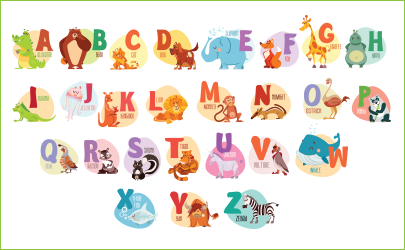
Jolly Phonics
A synthetic phonics program which has five main components which are learning the letter sounds, learning letter formation, blending for reading, identifying the sounds in words for writing, and tricky words.

Numicon
A distinctive multi-sensory approach to children’s mathematical learning that emphasizes three key aspects: communicating mathematically, exploring relationships, and generalizing.

Structured Teaching (TEACCH)
TEACCH programme is an evidence-based practice based at the University of North Carolina. It is based on the unique learning needs of children with autism.

Activity-Based Intervention (ABI)
ABI is an approach for working with young children that aims to develop functional skills by embedding the goals into their routines and activities. Multiple learning opportunities are provided throughout.

1 to 1 ABA
ABA is a research-based strategy which utilises well-established principles of learning to improve behaviour. Strategies that are commonly used in the centre include discrete trial training and reward system.

Speech Therapy
Our speech therapist is certified by the Allied Health Professions Council (APHC).
Early Intervention Centre Singapore for Autism & Developmental Needs
Early intervention can make a significant difference for children who show signs of developmental delay, autism, speech delay, social communication challenges, learning difficulties or behavioural concerns.
At Nurture Pods, our early intervention centre in Singapore provides structured support for children who need help building the foundation skills required for learning, communication, independence and school readiness.
Our programs are designed to support each child’s unique developmental profile. Instead of using a fixed approach for every child, we work closely with families to understand the child’s current abilities, challenges, learning style and goals.
Who Can Benefit from Early Intervention?
Early intervention may be helpful for children who experience:
- – Delayed speech or limited communication
- – Difficulty following instructions
- – Limited attention span
- – Social interaction challenges
- – Behavioural difficulties
- – Difficulty adapting to group settings
- – Learning delays
- – Poor classroom readiness
- – Autism-related developmental needs
- – Challenges with emotional regulation
The earlier children receive the right support, the better prepared they can be for future learning environments.
Our Early Intervention Approach
At Nurture Pods, early intervention focuses on helping children develop practical and functional skills. These may include communication, sitting tolerance, imitation, play, self-help, social interaction, pre-academic learning and classroom participation.
Our early intervention programme may include:
- – Individualized learning goals
- – Structured teaching methods
- – Small-group learning opportunities
- – Behaviour guidance
- – Communication development
- – Social skills practice
- – School readiness preparation
- – Parent feedback and home strategies
The programme is designed to help children make progress step by step, while also building confidence and independence.
Early Intervention for Children with Autism
Many children with autism benefit from early intervention because it provides consistent teaching, routine, structure and developmental support. For children who may struggle with attention, communication, social engagement or behaviour, early intervention helps build the foundation needed for future learning.
Nurture Pods supports children through a combination of structured intervention, therapy-informed teaching and family collaboration.
School Readiness and Transition Support
A strong early intervention programme should not only focus on current challenges. It should also prepare children for the next stage of learning.
At Nurture Pods, children may receive support in areas such as:
- – Following classroom routines
- – Sitting and attending to tasks
- – Participating in group activities
- – Communicating needs appropriately
- – Building peer interaction skills
- – Developing pre-academic readiness
- – Managing transitions
This helps children become better prepared for preschool, mainstream school, special education settings or other suitable learning environments.
Start with an Assessment
If you are searching for an early intervention centre Singapore, the first step is to understand your child’s current developmental needs. Our team can guide you on whether early intervention, autism therapy, social skills support or school readiness support may be suitable.
Contact Nurture Pods at 6352 5938 to arrange an assessment.
FAQs
An early intervention centre supports young children with developmental delays, autism, speech delay, learning difficulties, behavioural concerns or social communication challenges.
Children may benefit from early intervention as soon as developmental concerns are noticed. Early support can help build important communication, learning and social skills.
Yes. Early intervention can be helpful for children with autism because it supports communication, behaviour, social interaction, attention and learning readiness.
Early intervention is not tuition. It focuses on developmental skills, behaviour, communication, social interaction, independence and school readiness.
Yes. Parents should receive regular feedback so that strategies can also be supported at home.


